
used Cummins diesel engines for sale
Used Cummins Diesel Truck Engines
Tell us your Cummins engine serial number (ESN) and CPL, and we search supplier sources nationwide for a used engine built to the same configuration. Availability, condition and freight vary by unit and are confirmed on your quote.
01Start with the ESN and the CPL
Every Cummins engine carries a dataplate with two numbers that matter more than anything else when you shop for a replacement: the engine serial number (ESN) and the Control Parts List (CPL) number. The ESN identifies the individual engine. The CPL tells you how that engine was built: fuel system, turbocharger, rating family, and many of the bolt-on parts that make it fit a particular truck.
Two engines that share a model name can have different CPLs and very different parts underneath. An ISX15 built for one chassis and rating may not share a CPL with an ISX15 from a different truck of the same year. Matching the CPL, or confirming which parts differ, is how you avoid surprises with brackets, sensors, harness connectors and turbo plumbing.
If the dataplate is missing or unreadable, the ESN is usually also stamped into the block, and a Cummins dealer or a shop with Cummins service software can often pull the ESN and calibration information from the ECM. Send us whatever you have and we will work from there.
- Engine serial number (ESN), usually eight digits
- CPL number from the same dataplate
- Advertised horsepower and peak torque if shown
- Truck VIN, make, model and year
02X15 vs ISX15: how to tell them apart
The X15 is the current Cummins heavy-duty 15-liter, introduced for the 2017 emissions and greenhouse-gas regulations. The ISX15 is the earlier generation it replaced. Both are roughly 15 liters and both use SCR aftertreatment in their later versions, so they are easy to confuse at a glance, but they are not drop-in swaps for each other.
The X15 uses an updated fuel system, a different ECM and software, revised turbocharger and aftertreatment integration, and a single-module aftertreatment layout in many applications. Wiring, sensors and the engine-to-aftertreatment communication differ. Cummins also split the X15 into Efficiency and Performance series, which carry different rating ranges and some different hardware.
The quickest check is the dataplate: it will say X15 or ISX15 along with the ESN and CPL. Truck model year is a helpful clue but not proof, because trucks built around a model-year changeover can carry either engine. When in doubt, give us the ESN and we will confirm which generation you have before quoting anything.
03ISX generations and emissions eras
The ISX name covers more than a decade of engines that changed a lot under the valve cover. Early ISX engines used a single overhead cam. Around the 2002 to 2003 emissions change, Cummins moved to cooled EGR and a dual overhead cam design. The 2007 engines added a diesel particulate filter, and the 2010 engines, branded ISX15, added SCR with DEF.
Each step changed the ECM, harness, sensors and aftertreatment the engine expects to see. A pre-EGR ISX, an EGR engine without a DPF, a 2007 to 2009 DPF engine and a 2010-and-later SCR engine are four different replacement jobs. Putting an engine from one era into a truck built for another usually means changing aftertreatment, wiring and calibration, and it can create emissions compliance problems.
For that reason we ask for the truck's original engine model year and emissions label, not just the truck year. The emissions label on the valve cover or engine block states the model year the engine was certified to, which is what has to match.
- Pre-2002 era: single-cam ISX, no cooled EGR
- About 2002 to 2006: cooled EGR, dual overhead cam
- 2007 to 2009: EGR plus DPF
- 2010 to 2016: ISX15 with DPF and SCR (DEF)
- 2017 and later: X15
04Horsepower, torque and rating changes
Cummins heavy-duty engines are sold in many ratings on the same hardware family. The 15-liter engines have been offered from roughly 400 horsepower up to around 600 horsepower, with torque ratings matched to the transmission and axle the truck was spec'd with. The rating is set by calibration, but some ratings also depend on specific turbo, injector or cooling hardware.
Rerating an engine is not just a software change. The transmission's input torque limit, the cooling package and the emissions certification of the original truck all limit what rating is appropriate. If you want a replacement at a different rating than your original, tell us up front so the CPL and calibration can be checked against your drivetrain.
On mid-range engines like the L9 and ISB 6.7, ratings vary widely between vocational, bus, RV and medium-duty truck applications, and the same model can be configured very differently. The CPL is especially important on these engines.
05ISM, L9 and ISB 6.7: the 11-liter and mid-range engines
The ISM is a roughly 11-liter engine used in regional-haul, vocational and some linehaul trucks before Cummins moved its 11-to-12-liter offerings to other platforms. Many ISM engines are older pre-DPF units, which makes the emissions year on the label especially important when you replace one.
The L9 is the current name for the 8.9-liter engine that was sold as the ISL9 before the 2017 update. It shows up in medium-duty conventionals, vocational trucks, buses and fire apparatus. The ISB 6.7 is the 6.7-liter inline six used in medium-duty trucks and many non-truck applications. Both engines exist in a large number of CPL configurations with different front covers, accessory drives, oil pans and flywheel housings.
If you are replacing an L9, ISL9 or ISB 6.7, the oil pan style, flywheel housing size and the accessory layout often decide whether a used engine fits your chassis without swapping parts. Photos of your current engine from both sides help us narrow the search.
06What to send us when you call or request a quote
The fastest quotes start with complete information. With the ESN, CPL and truck VIN, our staff can identify the exact engine configuration and search supplier sources nationwide for units that match or can be made to match. Without them, we will ask questions to narrow it down, but the search takes longer.
Let us know whether you need a complete running engine, a long block, or a short block, and whether you are keeping your current turbo, aftertreatment and accessories. Also tell us about any known failure, such as a dropped valve, cracked block or spun bearing, so we can flag which parts of your old engine may be reusable.
Commercial-Engines.com is an independent sourcing company and is not affiliated with Cummins Inc. We use manufacturer names and model numbers only to identify the engines you are looking for.
- ESN and CPL from the dataplate
- Truck VIN, make, model and year
- Emissions model year from the engine label
- Transmission model and current horsepower rating
- Complete engine, long block or short block
- Photos of the dataplate and both sides of the engine
Applications
Trucks commonly running Cummins engines
Factory engine options changed by model year. Always confirm against your engine serial number and VIN.
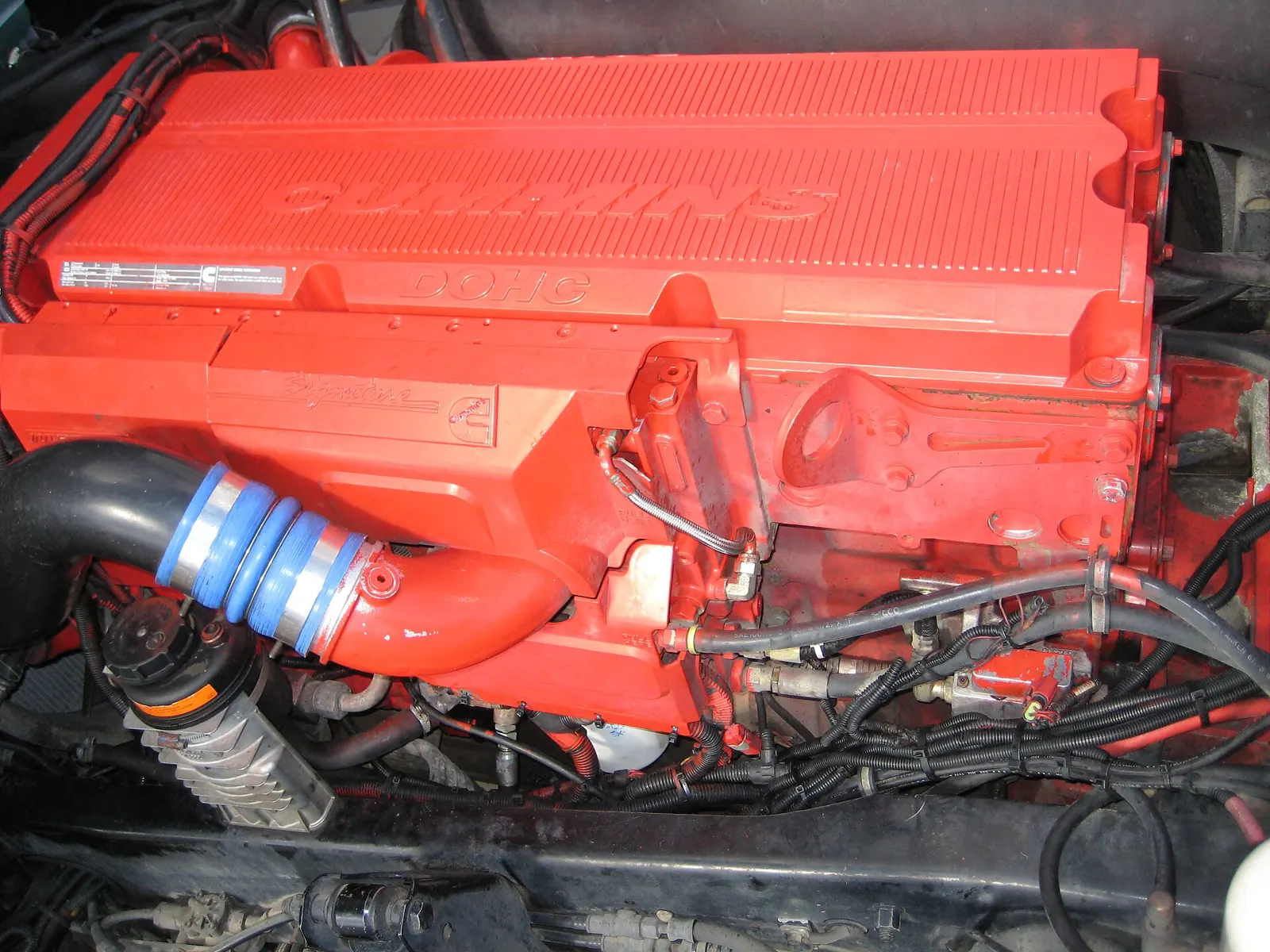
- The X15 and ISX15 are common in Class 8 linehaul trucks from Freightliner, Peterbilt, Kenworth, International, Volvo and Western Star, but each truck maker used different installation parts, so a used engine must be matched by CPL and model year.
- The ISX was widely installed in Peterbilt 379, 386 and 389 and Kenworth W900 and T800 trucks, where engine-mounted parts and harness routing can differ from the same engine in a Freightliner.
- The ISM appears in older regional and vocational trucks from several makers; check the emissions label carefully, because many are pre-2007 engines that cannot simply replace a later engine.
- The L9 and ISL9 are common in medium-duty and vocational chassis such as the Freightliner M2 112 and Peterbilt and Kenworth medium-duty models, with front cover, oil pan and flywheel housing varying by application.
- The ISB 6.7 is used in medium-duty trucks including the Freightliner M2 106 and some International and Ford medium-duty models, and configurations vary enough that the CPL should always be matched.
FAQ
Cummins engine questions
Where do I find the CPL number on a Cummins engine?
The CPL is printed on the Cummins engine dataplate next to the engine serial number. If the plate is damaged, a Cummins dealer or a shop with Cummins service software can usually read the ESN and related information from the ECM, and the ESN can be used to look up the build.
Can I put an X15 in a truck that came with an ISX15?
Not as a simple swap. The X15 uses a different ECM, wiring, fuel system and aftertreatment integration, and emissions certification ties the engine to the truck. It is usually far simpler and more compliant to replace an ISX15 with an ISX15 of the same emissions year and CPL.
Is a 2007 ISX the same as a 2010 ISX15?
No. The 2007 to 2009 engines use EGR and a DPF without SCR, while 2010-and-later ISX15 engines add SCR and DEF along with ECM and sensor changes. They are different replacement jobs, so tell us the emissions year from the engine label.
What does it mean if the CPL on a used engine doesn't match mine?
It means the engine was built with some different parts. Sometimes the difference is a bracket or sensor that can be swapped; sometimes it is a fuel system or turbo difference that matters. We compare the details before quoting so you know what may need to transfer from your old engine.
Do you sell engines directly from Cummins?
No. Commercial-Engines.com is an independent sourcing company, not a Cummins dealer, and is not affiliated with Cummins Inc. We search supplier sources nationwide for used engines that match your configuration.
Can you find an engine at a higher horsepower rating than my original?
We can search for one, but the rating has to suit your transmission, cooling system and the emissions certification of your truck. Tell us the rating you want and your transmission model so the configuration can be checked before you commit.
How do I know if my engine is an ISL9 or an L9?
The dataplate states the model. In general, the ISL9 name was used before the 2017 update and L9 afterward, but trucks built near the changeover can vary, so the ESN and CPL are the reliable way to confirm.
Ready when you are
Need a Cummins engine? Send the serial and we'll start the search.
Have your engine serial number, CPL and VIN handy. If you don't, we'll help you find them.
Commercial-Engines.com is an independent supplier of used commercial truck engines and transmissions. Manufacturer names, model names and part numbers are used for identification only and do not imply affiliation with, or endorsement by, any manufacturer. Read the full disclaimer.